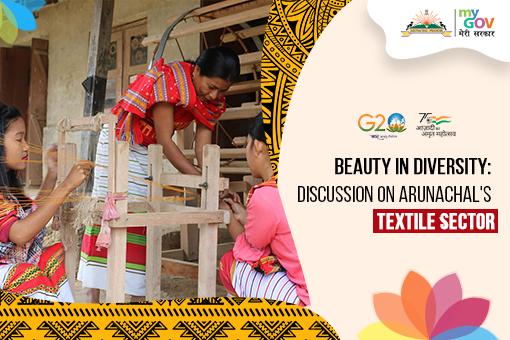
Arunachal Pradesh traditionally known for its mesmerizing landscape is also home to a rich textile and handicraft industry. And because the state houses more than 20 major tribes and 100 sub-tribes, it is known for its diverse range of handloom and handicrafts, which are a reflection of the region's rich cultural heritage and traditional practices.
Handloom & Weaving: The handloom weaving industry is a significant source of employment in Arunachal Pradesh. The state is renowned for the excellent handmade textiles crafted by skilled weavers. The different tribes of Arunachal Pradesh weave using a variety of methods and designs to produce a wide range of textiles. Every tribe in the state has a distinctive weaving technique that is passed down from generation to generation. Each piece is distinctive and a testament to the weavers' abilities owing to the elaborate designs and patterns used in the weaving procedures.
The handloom weaving industry has enormous potential in Arunachal Pradesh, and many organizations and government bodies are working towards preserving and promoting this traditional craft. The state government has established a Handloom and Handicrafts Development Corporation to provide financial assistance, training, and marketing support to the weavers. The corporation also provides raw materials, looms, and other equipment to the weavers to create quality products.
Handicrafts: Arunachal Pradesh is also known for its diverse range of handicrafts, ranging from woodcarving to basketry. Each tribe in the state has its unique craftsmanship, creating beautiful products that showcase their traditional practices and cultural heritage. Some of the popular handicrafts of Arunachal Pradesh include bamboo and cane products, pottery, woodcarving, and beadwork. Pottery is another traditional craft that has been practiced in Arunachal Pradesh for generations. Woodcarving is a traditional craft that is practiced by many tribes in Arunachal Pradesh with beautiful patterns and beadwork is another popular craft in Arunachal Pradesh and is typically used to decorate clothes, bags, and jewelry.
Marketing and Export Opportunities:
Arunachal Pradesh's textile and handicraft industry has great potential to grow and expand. The state government has taken many initiatives to market and promote these crafts, particularly at the national and international levels, after realizing their full potential. The government has established several emporiums that sell these products and also participates in various trade fairs and exhibitions to showcase these crafts.
Furthermore, several NGOs and private organizations are working to create long-term employment opportunities for local artisans. These organizations train and empower artisans to produce high-quality goods while also assisting them in gaining access to markets.
MyGov Arunachal Pradesh invites citizens to share their valuable opinion and suggestions on how we can promote and market these local crafts to increase their reach and visibility.







BrahmDevYadav 3 years 1 week ago
What are the ways to develop Small Scale Industry in state?
There are several ways to increase small scale industry knowledge.
1.Networking.
2.Reading industry publications.
3.Mentorship.
4.Online research.
5.Taking refresher courses.
6.Finding a niche.
7.Identify new opportunities.
BrahmDevYadav 3 years 1 week ago
What is the short note about the beauty of Arunachal Pradesh?
Arunachal Pradesh:- Arunachal Pradesh is known as the treasure trove of nature's divine beauty. Home to gorgeous orchids and the most elegantly beautiful blooms, Arunachal Pradesh is decked with ancient monasteries and gumphas.
BrahmDevYadav 3 years 1 week ago
Which state is famous for textile industry in India?
Gujarat:-Gujarat is more famous for its cotton textile sector than the other options. Ahmedabad, Gujarat, has become a prominent cotton textile industry centre known as the "Manchester of India" due to the abundant availability of raw materials and a humid climate for spinning and weaving.
BrahmDevYadav 3 years 1 week ago
Which material is famous in Arunachal Pradesh?
Bamboo and cane are extensively used in Arunachal Pradesh to make handicrafts and household utilities. The Arunachalis are expert craftsmen, who create some of the most exquisite artifacts using cane and bamboo.
BrahmDevYadav 3 years 1 week ago
What is the traditional textile of Arunachal Pradesh?
Minyong is a traditional cloth used by the community. Stripes form a part of the design along with the signature motifs. For communities in Arunachal Pradesh, community identity is displayed through clothes, jewellery, artefacts and lifestyles.
BrahmDevYadav 3 years 1 week ago
Which textile is Arunachal Pradesh famous for?
The Apatani weave comes from the Apatani tribe of Arunachal Pradesh living at Ziro, the headquarters of lower Subansiri district. The woven fabric of this tribe is known for its geometric and zigzag patterns and also for its angular designs. This fabric textiles export in other countries in a large scale.
BrahmDevYadav 3 years 1 week ago
What is the importance of traditional art and culture in state?
With values, cultural practices and belief systems embedded in these art forms, they often form a common language through which the different communities that fabricate the society can be engaged smoothly.
BrahmDevYadav 3 years 1 week ago
What is the importance of traditional art and craft in state?
They help us understand the history of the people who made them and their significance. The traditional crafts are a constant reminder of a slow and green life being part of our culture.
BrahmDevYadav 3 years 1 week ago
What is the importance of art and craft to the society?
Art is a form of expression that has the power to change people's perspectives and shape society. It is an important part of our daily lives, as it helps us to better understand the world around us.
BrahmDevYadav 3 years 1 week ago
What is the importance of handicraft industry in state?
Handicraft reflects the culture and heritage of society and known as symbolizes which in true color for portrays the day to day culture of the population. It promotes the heritage of a country through the use of indigenous materials and it preserves traditional knowledge and talents.