Hardcore drugs, tobacco and alcohol are chief substances consisting of underlying toxic ingredients, that may lead to irreversible health damage or untimely demise of an individual. And the bitter ground reality is that more than half of the substance abusers are youths. And more often than not, they start very young.
Children may learn what they perceive from their environment, be it under the boundary of their home and surveillance, the premises of the educational institution and supervision or simply around peer groups outside in the recreational zones. We can never be too careful when it comes to unanticipated addiction to lethal substances. Young minds tend to be naive hence, they get deeper into such habits, even when they want to get out of the addiction. And it is inevitable that once an individual falls into the trap of addiction, it is relatively harsh to come back to sobriety and fit into the norms of society.
Extreme addiction to illicit substances also has a higher likelihood in carving the path to criminal and unlawful directions. Instances of addiction and withdrawal have led to sinful crimes such as murder, smuggling, robbery and kidnapping amongst others. However, the consequences of substance addiction aren't limited to criminal activities alone. It can drastically affect one’s mental and physical health to the point of no return; in extreme cases, it may also lead to death.
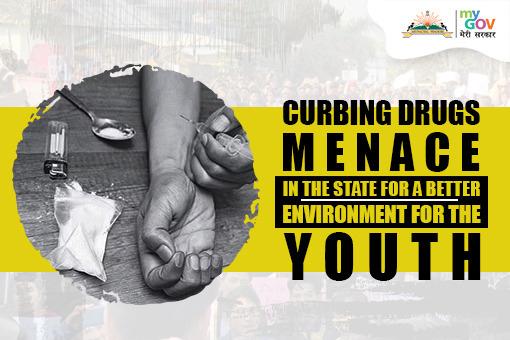
Keeping the unfavourable aspects of toxic substance consumption as context, MyGov Arunachal invites you to share your valuable suggestions on measures to tackle drug menace-related issues in the state.









Farvez Basha D 3 years 2 months ago
For trial use, respondents were asked how they rated (“very unlikely” to “very likely”) the following possible consequences of marijuana use
Farvez Basha D 3 years 2 months ago
or regularly (“nearly every month”), whereas all of those who had previously used marijuana were asked regular-use questions.
Farvez Basha D 3 years 2 months ago
Initially, respondents who had never used marijuana were randomly selected to be asked about the consequences of marijuana use on a trial basis (“even once or twice”)
Farvez Basha D 3 years 2 months ago
Get in trouble with the law,” with responses on a 5-point scale from “very unlikely” to “very likely”).
Farvez Basha D 3 years 2 months ago
(e.g., “How likely is it that the following would happen to you if you used marijuana, even once or twice, over the next 12 months? I would
Farvez Basha D 3 years 2 months ago
The antimarijuana attitudes and beliefs index included responses to 8 specific expected-outcome questions
Farvez Basha D 3 years 2 months ago
By contrast, 39% of prior nonusers who gave any other answer said at the next interview that they had initiated use.
Farvez Basha D 3 years 2 months ago
9% of those who answered “definitely will not” at a given round reported use when they were reinterviewed 12 to 18 months later at the next round.
Farvez Basha D 3 years 2 months ago
among those aged 12.5 to 18 years who said they had never used marijuana,
Farvez Basha D 3 years 2 months ago
Consistent with the theory of reasoned action, this intention measure proved to be a powerful predictor of future behavior: