Hardcore drugs, tobacco and alcohol are chief substances consisting of underlying toxic ingredients, that may lead to irreversible health damage or untimely demise of an individual. And the bitter ground reality is that more than half of the substance abusers are youths. And more often than not, they start very young.
Children may learn what they perceive from their environment, be it under the boundary of their home and surveillance, the premises of the educational institution and supervision or simply around peer groups outside in the recreational zones. We can never be too careful when it comes to unanticipated addiction to lethal substances. Young minds tend to be naive hence, they get deeper into such habits, even when they want to get out of the addiction. And it is inevitable that once an individual falls into the trap of addiction, it is relatively harsh to come back to sobriety and fit into the norms of society.
Extreme addiction to illicit substances also has a higher likelihood in carving the path to criminal and unlawful directions. Instances of addiction and withdrawal have led to sinful crimes such as murder, smuggling, robbery and kidnapping amongst others. However, the consequences of substance addiction aren't limited to criminal activities alone. It can drastically affect one’s mental and physical health to the point of no return; in extreme cases, it may also lead to death.
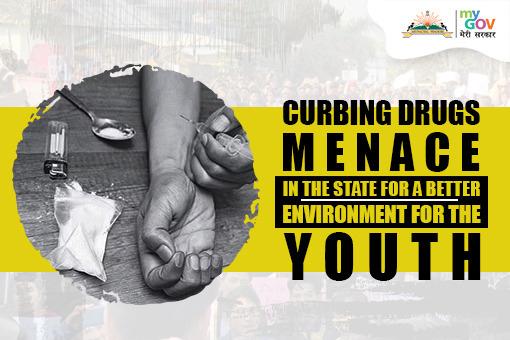
Keeping the unfavourable aspects of toxic substance consumption as context, MyGov Arunachal invites you to share your valuable suggestions on measures to tackle drug menace-related issues in the state.









Farvez Basha D 3 years 2 months ago
the theory of reasoned action7 and social cognitive theory.
Farvez Basha D 3 years 2 months ago
The cognitive measures were developed on the basis of 2 health behavior theories,
Farvez Basha D 3 years 2 months ago
(3) “More than 12 months ago.”
Farvez Basha D 3 years 2 months ago
(2) “More than 30 days ago but within the last 12 months,” and
Farvez Basha D 3 years 2 months ago
Possible responses were (1) “During the last 30 days,”
Farvez Basha D 3 years 2 months ago
Have you ever, even once, used marijuana?” This was followed up by the question, “How long has it been since you last used marijuana?”
Farvez Basha D 3 years 2 months ago
From now on, when marijuana is mentioned, it means marijuana or hashish.
Farvez Basha D 3 years 2 months ago
Hashish is a form of marijuana that is also called hash.
Farvez Basha D 3 years 2 months ago
Marijuana is sometimes called pot, grass, or weed. Marijuana is usually smoked, either in cigarettes, called joints, or in a pipe.
Farvez Basha D 3 years 2 months ago
To measure lifetime use, the respondent was told, “The next questions are about marijuana and hashish.