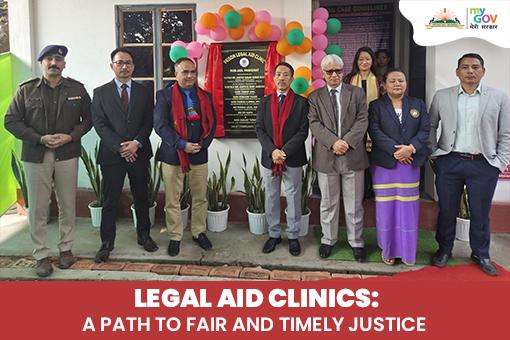
The inauguration of the Prison Legal Aid Clinic at Sub-Jail, Pasighat, marks a significant step toward strengthening access to justice across Arunachal Pradesh. This initiative ensures that inmates and undertrial prisoners, regardless of their financial background, receive free legal assistance, guidance, and awareness about their rights. Many prisoners, especially in remote regions, lack proper legal representation or knowledge of judicial procedures. As a result, undertrials often remain in custody longer than necessary. The Legal Aid Clinic addresses this gap by providing timely support, helping inmates understand their cases, and enabling faster and fairer legal processes.
Beyond legal assistance, such clinics play an important role in promoting human dignity and rehabilitation. Legal awareness empowers inmates to make informed decisions and prepares them for reintegration into society. It also strengthens transparency and accountability within the justice system. For a geographically vast and diverse state like Arunachal Pradesh, where connectivity and awareness can be challenging, expanding such services to all districts and sub-jails will be essential.
Join the Discussion on MyGov Arunachal Pradesh:
1. How can Prison Legal Aid Clinics be expanded to other districts in Arunachal Pradesh to ensure equal legal access for all inmates?
2. What role can legal awareness programs play in reducing undertrial detention and improving justice delivery?
3. How can the government and legal institutions collaborate to make legal aid more accessible in remote and rural areas of the state?









BrahmDevYadav 19 hours 20 min ago
5. Partnerships with Legal Education:- Law schools and colleges are urged to establish legal aid clinics in surrounding rural areas to provide practical, community-based legal support.
By integrating these strategies, legal aid can become more decentralized and responsive to the needs of the rural population.
BrahmDevYadav 19 hours 22 min ago
4. Empowering Para-legal Volunteers:- Training locals as PLVs to act as the first point of contact for legal issues enables immediate, local assistance and bridges the gap between rural populations and the District Legal Service Authority.
5. Awareness Campaigns:- Intense, localized campaigns targeting specific rural issues—such as property disputes and matrimonial concerns—help boost the utilization of available services.
BrahmDevYadav 19 hours 23 min ago
2. Nyaya Bandhu (Pro Bono Legal Services):- The government promotes pro bono legal services, encouraging lawyers to provide free legal aid. The Nyaya Bandhu platform connects these advocates with eligible citizens.
3. Mobile Legal Clinics & Legal Aid Clinics:- To overcome geographical barriers, Legal Services Authorities set up legal aid clinics in villages, jails and through mobile units to offer on-site advice and representation.
BrahmDevYadav 19 hours 24 min ago
1. Technology-Enabled Access (Tele-Law):- The government connects rural residents with lawyers through video conferencing available at Common Service Centres and via mobile apps. This service, available at over 2.5 lakh Gram Panchayats, connects beneficiaries with panel lawyers from State Legal Services Authorities.
BrahmDevYadav 19 hours 27 min ago
Government and legal institutions can make legal aid more accessible in remote and rural areas by adopting a multi-pronged approach: deploying technology via Tele-Law kiosks in Common Service Centres, utilizing mobile legal aid clinics, training Para-legal Volunteers from local communities and organizing awareness campaigns to address the lack of knowledge about rights.
BrahmDevYadav 19 hours 29 min ago
Can we go directly to Lok Adalat?
Litigants may participate in Lok Adalat either directly or through their advocates. If any litigant needs legal assistance, the same will be provided to him.
BrahmDevYadav 19 hours 31 min ago
When can legal aid be denied or withdrawn?
A) Legal aid can be withdrawn in the event of death of the aided person except in the case of civil proceedings where the right or liability survives.
B) Legal aid can be withdrawn where the application for legal service or the matter in question is found to be an abuse of the process of law or of legal services.
BrahmDevYadav 19 hours 33 min ago
Which body in India is responsible for providing free legal aid?
The National Legal Services Authority has been constituted under the Legal Services Authorities Act, 1987 to provide free Legal Services to the weaker sections of the society and to organize Lok Adalats for amicable settlement of disputes.
BrahmDevYadav 19 hours 35 min ago
What are the functions of legal aid clinic?
The thrust is on the basic legal services like legal advice and assisting in drafting of notices, replies, applications, petitions etc. The lawyer manning the legal aid clinic will also attempt to resolve the disputes of the people in the locality, preventing the disputes from maturing into litigation.
BrahmDevYadav 19 hours 37 min ago
What are the duties of advocate toward legal aid?
An advocate’s duty to render legal aid is a professional and ethical obligation to provide free or affordable legal services to indigent, oppressed or marginalized individuals. Under the Bar Council of India Rules, they must ensure access to justice for all, upholding Article 39A of the Constitution. Key responsibilities include taking on pro bono cases, representing those unable to pay and spreading legal awareness.