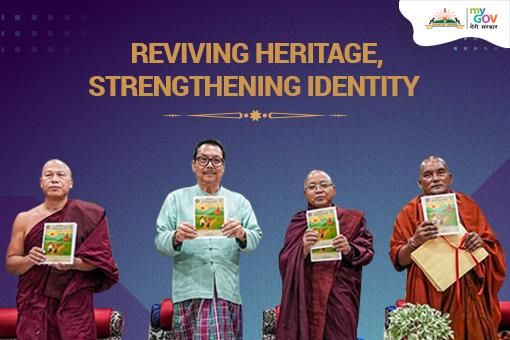
Deputy Chief Minister Chowna Mein recently inaugurated a 30-Day Workshop cum Training on Tai Khamti Revised Script and Pali-Tai Literature at Namsai. This initiative, organized by the Tai Khamti Heritage & Literature Society in collaboration with the Tai Khamti Literature Board, is more than a cultural event; it is a step towards preserving identity, knowledge, and history.
Through such workshops, learners are equipped with literacy in the script and a sense of belonging and continuity.
Join the Discussion on MyGov:
1. How can Arunachal’s youth be motivated to learn, preserve, and promote their indigenous scripts and traditions?
2. What role can schools, colleges, and universities play in integrating tribal literature and culture into education?
3. How can digital platforms be used to document, archive, and promote the endangered languages of Arunachal?







BrahmDevYadav 1 year 2 months ago
What is the traditional of the Tai Khamti?
The Tai-khampti people are very strong believers of Theravada(Hinayana) Buddhism. Every house has a prayer room and the families pray every morning and evening with offerings of flower (nam taw yongli) and food (khao tang som). They are peace loving people.
BrahmDevYadav 1 year 2 months ago
What is the history of the Tai Khamti?
The Tai-Khamti people migrated from Khamti Long in Upper Burma (Myanmar) to the Namsai district of Arunachal Pradesh and parts of Assam in the 18th century, establishing a kingdom in Sadiya before being dispersed by the British in the mid-19th century. They are a Theravada Buddhist community with a distinct Tai language script called Lik-Tai and a rich cultural heritage as marked by the main festival of Sangken.
BrahmDevYadav 1 year 2 months ago
To preserve the history of the Tai Khamti Heritage and Literature Society in Hindi, we can document oral traditions, collect and translate ancient scripts and literature, create digital archives, organize cultural workshops and events and integrate the history into the formal education system. These methods help to revive, promote and pass on the rich cultural heritage and knowledge of the Tai Khamti people to future generations.
Tapas Talukder 1 year 2 months ago
Capacity building and training to upskill grassroots functionaries
BrahmDevYadav 1 year 2 months ago
हमारी विरासत को संरक्षित करना क्यों महत्वपूर्ण है?
संक्षेप में, हमारी समृद्ध विरासत को संरक्षित करना सांस्कृतिक पहचान को बनाए रखने,भावी पीढ़ियों को शिक्षित करने, अर्थव्यवस्था को बढ़ावा देने और सामाजिक सामंजस्य को बढ़ावा देने के लिए महत्वपूर्ण है।
BrahmDevYadav 1 year 2 months ago
भारत के धरोहर स्थलों का निष्कर्ष क्या है?
निष्कर्ष:- भारत दुनिया के सबसे प्राचीन देशों में से एक है जिसकी जड़ें मानव सभ्यता के प्राचीन इतिहास में गहराई से समाई हुई हैं। इसलिए ये धरोहरें आज भी पूरी तरह से संरक्षित हैं।
BrahmDevYadav 1 year 2 months ago
हमारी संस्कृति हमारी पहचान को कैसे प्रभावित करती है?
अंत में, परिभाषा यह स्वीकार करती है कि संस्कृति सत्य और असत्य के बारे में हमारी मान्यताओं, हमारी पसंद और नापसंद सहित हमारे दृष्टिकोण, सही और गलत के बारे में हमारे मूल्यों और हमारे व्यवहारों को प्रभावित करती है। इन्हीं सांस्कृतिक प्रभावों से हमारी पहचान बनती है।
BrahmDevYadav 1 year 2 months ago
राष्ट्रीय पहचान की 5 विशेषताएं क्या हैं?
राष्ट्रीय पहचान में राजनीतिक और सांस्कृतिक दोनों तत्व शामिल होते हैं। एक सामूहिक घटना के रूप में, यह लोगों के दैनिक जीवन में "समान बिंदुओं" की उपस्थिति से उत्पन्न हो सकती है:-
राष्ट्रीय प्रतीक, भाषा, राष्ट्र का इतिहास, राष्ट्रीय चेतना और सांस्कृतिक कलाकृतियाँ ।
BrahmDevYadav 1 year 2 months ago
राष्ट्रीय पहचान को संरक्षित करने के तीन तरीके क्या हैं?
राष्ट्रीय प्रतीकों को शिक्षा और जागरूकता, कानूनी संरक्षण और सांस्कृतिक परंपराओं के माध्यम से संरक्षित किया जा सकता है। ये तरीके समझ को बढ़ावा देते हैं, अपमान को रोकते हैं और राष्ट्रीय विरासत के महत्व का जश्न मनाते हैं।
BrahmDevYadav 1 year 2 months ago
हमें अपनी संस्कृति और विरासत का संरक्षण क्यों करना चाहिए?
पहचान का संरक्षण: संस्कृति और विरासत किसी भी समुदाय की पहचान और सामूहिक स्मृति के प्रमुख घटक हैं। ये परिभाषित करते हैं कि हम कौन हैं, हम कहाँ से आए हैं, और हम किन मूल्यों और परंपराओं को प्रिय मानते हैं। इनका संरक्षण यह सुनिश्चित करता है कि आने वाली पीढ़ियों को अपनी जड़ों और विरासत की गहरी समझ हो ।