It is an indisputable fact that our culture narrates our story, and our heritage sites chronicle our history. Although the history of our indigenous culture is often scarce in written records, it has been lovingly passed down through generations via oral traditions, including folklore and poetry. Additionally, we can draw insights from the histories of more developed civilizations in the past.
In the present day, our responsibility lies in the preservation and safeguarding of the knowledge and treasures we have already unearthed and what we currently understand. Our ancestors exemplified self-reliance, leading simple yet healthy lives while cherishing and respecting the natural world.
Some of the ways to hold on to our cultural roots, are through the simple process of reviving age-old customs, including our traditional culinary practices, native dialects, art & craft, sustainable agriculture and so on. We must also embrace rituals that pay homage to nature and the spirits, including the roles of our local priests and their divine connections.
In our modernised and busy lives, it is crucial that we reconnect with our roots by visiting our villages and learning from the wisdom of our parents and elders. They represent the last generation to experience life before modernization and may be the last witnesses of a bygone era. Engaging in dialogue with our parents and elders allows us to uncover the authentic life stories of village existence, the wisdom of our grandparents, and the customs that define us, ensuring this knowledge isn't lost as they hold the last threads of our past.
Similarly, maintaining and preserving our historical sites is of utmost importance. By doing so, we can confidently narrate our cultural story to those beyond the borders of Arunachal Pradesh.
State treasures like Ita Fort, Malinithan, Parshuram Kund, etc. possess both historical and mythological significance. These sites hold the secrets of centuries past and are an integral part of our heritage, and it's our duty to protect this legacy with pride.
It would be deeply regrettable if we were unable to converse in our native dialect or lacked basic knowledge of our state and its cultural heritage when questioned. In the face of such an inquiry, our silence would be a poignant testament to our neglect. To avoid such embarrassment, we must commit to learning, preserving, protecting, and sharing the invaluable legacy of our history, culture, and traditions. It is our duty and privilege to do so with pride and dedication.
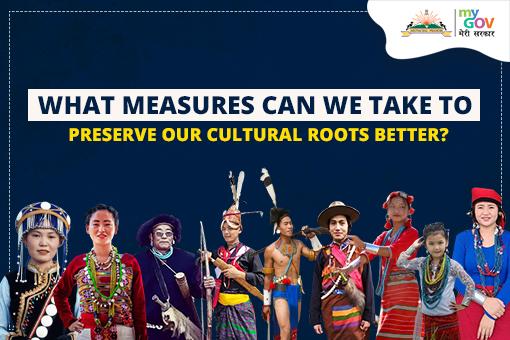
Inviting citizens of Arunachal Pradesh to share their views on how we can preserve our cultural identity better while going hand in hand with changing times.









BrahmDevYadav 2 years 11 months ago
How can education preserve culture?
Through education, individuals can learn about their cultural heritage including their beliefs, customs and traditional practices. This knowledge is then passed down from one generation to the next, ensuring that cultural traditions and practices are not lost over time.
BrahmDevYadav 2 years 11 months ago
What are the three ways to preserve and protect our heritage?
1)Prevent ourselves and others from scribbling on the walls.
2)Participating in the regular Cleanliness Drives.
3)Spreading awareness around about these monuments and their importance.
BrahmDevYadav 2 years 11 months ago
What is the best way to preserve cultural heritage?
The best way to preserve your cultural heritage, whatever it may be, is to share it with others. Cultural heritage and natural history of a nation has a very high value and is unique. It is an identity that can be introduced to the world.
BrahmDevYadav 2 years 11 months ago
What is an example of cultural preservation?
Cultural heritage preservation means keeping the artifacts and traditions of a community intact against factors trying to change them or wear them away. Some common examples are restoring historical buildings, passing on an ancient craft or recording traditional tales.
BrahmDevYadav 2 years 11 months ago
How can we preserve our rich heritage 4 points?
1.Prevent ourselves and others from scribbling on the walls.
2.Participating in the regular Cleanliness Drives.
3.Being a part of the 'Adopt a Heritage' initiative.
4.Spreading awareness around about these monuments and their importance.
BrahmDevYadav 2 years 11 months ago
Why is conservation of heritage important?
Conservation of heritage buildings is very important because it provides a sense of identity and continuity in a fast changing world for future generations. Heritage buildings basically represent the past history and culture of a nation.
BrahmDevYadav 2 years 11 months ago
Why is it important to preserve Indian culture?
They reflect a deep awareness of the nation's rich culture and a steadfast commitment to preserving its heritage. By safeguarding and promoting India's cultural and spiritual treasures, the government aims to enrich the present and future generations' understanding of Indian history and culture.
BrahmDevYadav 2 years 11 months ago
What does the government do to preserve our culture and heritage?
The government aims to adopt 500 protected sites by 15th August 2023 and another 500 sites shortly thereafter, which would be a tenfold increase in the number of sites brought under the ambit of the original 'Adopt a Heritage' scheme launched in 2017.
BrahmDevYadav 2 years 11 months ago
How can we preserve our local culture and tradition?
We can also preserve traditional customs by participating in practices like cooking recipes passed down through the generations or teaching children how to dance traditional dances. Visit historic sites related to our culture, attend events hosted by cultural centers' or even take trips abroad if possible.
BrahmDevYadav 2 years 11 months ago
How can we preserve Indian culture?
1.The inscription of properties on the World Heritage List and the list of World Heritage in
Danger.
2.The protection and conservation of World Heritage properties.
3.The granting of International Assistance under the World Heritage Fund.