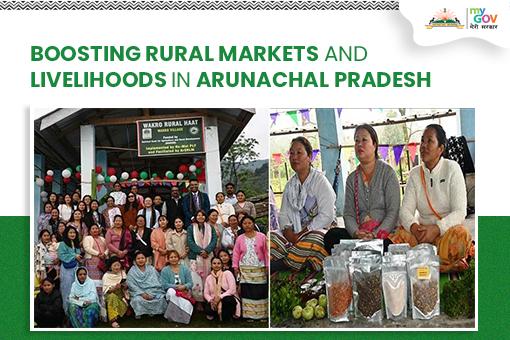
The National Bank for Agriculture and Rural Development (NABARD) has inaugurated two Rural Haats in Namsai and Wakro, marking an important step toward strengthening rural livelihoods in Arunachal Pradesh.
These haats will provide improved market access for local farmers and Self-Help Groups (SHGs), enabling them to sell their produce directly and enhance their income opportunities.
The initiative is being implemented by NOSAAP Producer Company in collaboration with Rumai Primary Level Federation under the Arunachal State Rural Livelihoods Mission. It reflects a broader commitment to empowering rural communities, promoting local products, and fostering grassroots entrepreneurship.
Join the Discussion on MyGov Arunachal Pradesh:
• Why are local markets important for villages?
• How can digital platforms complement Rural Haats for better market reach?
• What support do farmers need to use these haats more effectively?
Share your thoughts and be part of building a stronger rural economy!







BrahmDevYadav 3 months 4 weeks ago
What can we do to support farmers?
1. Making an enormous push toward sustainable production.
2. Improving financial and other resources for farmers.
3. Reforming land titling to lift up marginal and women farmers.
4. Learning from success stories.
5. Reforming the APMCs.
BrahmDevYadav 3 months 4 weeks ago
Supporting Self-Help Groups (SHGs):- Enabling SHGs, particularly women-led ones, to use haats for selling processed goods and handloom products.
These initiatives, when coupled with the Agriculture Infrastructure Fund and other government schemes, can make these local haats more viable and profitable.
BrahmDevYadav 3 months 4 weeks ago
4. Policy and Institutional Support:-
Empowering Local Management:- Strengthening the role of Gram Sabhas in governing these haats to ensure they serve local needs.
Integrating with e-NAM:- Connecting rural haats to the National Agriculture Market (e-NAM) platform] to widen the buyer base.
BrahmDevYadav 3 months 4 weeks ago
Transportation Facilities:- Facilitating shared or community-driven transport options to reduce the high cost of transporting produce from farm to market.
BrahmDevYadav 3 months 4 weeks ago
3. Financial and Logistical Support:-
Digital Adoption:- Training in digital literacy and adoption of online payment systems for transparent, cashless transactions.
Access to Credit:- Linking haat sales with formal, easy-to-access credit such as the Kisan Credit Card.
BrahmDevYadav 3 months 4 weeks ago
Direct-to-Consumer Links:- Encouraging direct selling to local consumers or institutional buyers through Farmer Producer Organizations to increase profit margins.
BrahmDevYadav 3 months 4 weeks ago
2. Market and Price Transparency:-
Regulation of Middlemen:- Implementation of fair auction processes to eliminate the Exploitation by traders and middlemen, ensuring farmers receive fair value.
Price Information Services:- Providing real-time, local price data on commodities to prevent distress sales caused by lack of market knowledge.
BrahmDevYadav 3 months 4 weeks ago
* Grading and Sorting Units:- Facilities for sorting, grading and packaging to ensure farmers get better prices for higher-quality produce, rather than a flat rate from agents.
* Accessibility:- Improved, all-weather approach roads to connect farms to these local markets.
BrahmDevYadav 3 months 4 weeks ago
The following support areas to improve the effectiveness of these haats include:-
1. Physical Infrastructure Upgrades:-
Essential Facilities: Basic amenities such as permanent sheds, proper weighing scales, clean drinking water, electricity and sanitation facilities are needed.
2. Storage and Preservation:- Construction of small-scale warehouses and crucially, cold storage facilities near the haat to prevent post-harvest losses, particularly for perishable fruits and vegetables.
BrahmDevYadav 3 months 4 weeks ago
Farmers need comprehensive support to transform traditional, often unhygienic, rural haats (weekly markets) into efficient, modern marketing platforms. The core requirements include better physical infrastructure, financial integration, improved logistical connectivity and digital adoption.