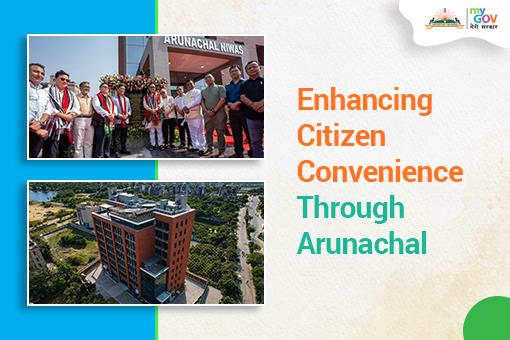
The inauguration of Arunachal Niwas at Dheerpur, New Delhi, by CM Pema Khandu marks a significant step towards improving facilities and support systems for citizens and visitors from Arunachal Pradesh staying in the national capital.
Spread across 2600 sq m with a built-up area of 7198 sq m, the modern G+8 complex includes 59 well-appointed rooms, dormitories, dining areas, medical support, and parking facilities. The new infrastructure is expected to provide greater comfort, safety, convenience, and a better overall experience for guests, officials, students, patients, and citizens visiting New Delhi for various purposes.
Such initiatives not only strengthen connectivity between the State and the capital but also reflect a commitment towards citizen welfare and improved public infrastructure outside the State.
Join The Discussion on MyGov Arunachal Pradesh:
1. How important are state guest houses and transit facilities for citizens visiting major cities like New Delhi?
2. What additional services or facilities would you like to see included in such modern accommodation complexes?
3. Do you think similar citizen-centric infrastructure projects should be developed in other metropolitan cities across India?







BrahmDevYadav 1 month 2 weeks ago
नागरिकों के लिए प्रमुख लाभ:-
1. किफायती विकल्प:- प्रमुख महानगरीय क्षेत्रों में निजी होटल अक्सर बहुत महंगे होते हैं, सरकारी सुविधाएं बजट के अनुकूल आवास प्रदान करती हैं।
2. सुरक्षा और सुगमता:- आमतौर पर सुरक्षित और अच्छी तरह से जुड़े हुए इलाकों में स्थित होने के कारण, ये आवास एक विशाल राजधानी शहर में आवागमन के दौरान होने वाले तनाव को कम करते हैं।
BrahmDevYadav 1 month 2 weeks ago
नागरिकों के लिए जीवन रेखा का कामकरती हैं। ये बाहर से आने वाले आगंतुकों, चिकित्सा देखभाल चाहने वाले रोगियों, छात्रों और प्रशासनिक कार्यों के लिए यात्रा करने वाले लोगों के लिए किफायती, सुरक्षित और विश्वसनीय आश्रय स्थल के रूप में कार्य करती हैं।
DagyirLollen_2 1 month 4 weeks ago
Being from Arunachal Pradesh, this initiative makes me feel proud. Moving to a big city like New Delhi can be challenging, especially for students, patients, and first-time visitors. Arunachal Niwas is not just a building; it is a place where people from our state can feel safe and welcomed. I believe this project shows that development is also about taking care of people. I sincerely hope more such initiatives continue in the future.
DagyirLollen_2 1 month 4 weeks ago
As someone from Arunachal Pradesh, I feel proud to see the inauguration of Arunachal Niwas in New Delhi. Many people from our state travel to Delhi for higher education, medical treatment, jobs, and official work. Staying in a new city is not always easy, especially for students and families. Arunachal Niwas will provide a safe, comfortable, and welcoming place where people can feel at home even when they are far away. I believe this is a thoughtful initiative that truly reflects the government
DagyirLollen_2 1 month 4 weeks ago
Yes, I do. Many people from Arunachal Pradesh travel to different cities every year. Having such guest houses in places like Bengaluru, Mumbai, and Chennai will make travelling easier and less stressful. I hope more such projects are started in the future because they truly help ordinary people.
DagyirLollen_2 1 month 4 weeks ago
In my view, they are more than just places to stay. They give people a sense of security and belonging when they are away from home. For many first-time visitors, especially students and patients, such facilities can make their visit much more comfortable and worry free and specially parents will be alsi less stressful
DagyirLollen_2 1 month 4 weeks ago
Yes, definitely. I believe similar guest houses should also be built in cities like Bengaluru, Mumbai, Chennai, and Kolkata. It will help people from Arunachal Pradesh feel more secure and comfortable whenever they travel outside the state. This is a thoughtful initiative that truly puts citizens first.
DagyirLollen_2 1 month 4 weeks ago
It would be great to have free Wi-Fi, a small study area for students, a 24-hour help desk, basic medical support, clean food, and transport assistance. These simple facilities can make a big difference for visitors
DagyirLollen_2 1 month 4 weeks ago
I think they are very important many people from Arunachal Pradesh travel to New Delhi for studies, medical treatment, government work, or job opportunities. Having a safe and affordable place to stay makes their journey much easier and less stressful for all the people specially for students
Akshay Jain 3 months 3 weeks ago
I have a Suggestion that Kindly Merge Gramin Bank as a Gramin Bank of India from which it can make a Stronger Bank & make a Central Owned Bank.